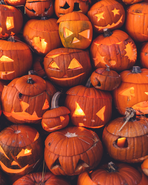
Ask people to picture autumn and plenty of them will describe a pumpkin patch: rows of orange on a sunny October afternoon, a wagon piled with hay, kids hauling pumpkins nearly as big as they are. Pumpkin patches are among the most popular family outings of the Halloween season, and for farms and event organizers they can be an important source of seasonal income.
Whether you are planning a visit or planning to open your own patch to the public, here is what you need to know.
What to expect at a pumpkin patch
At its simplest, a pumpkin patch is a farm field or lot where visitors pick out their own pumpkins. Some patches let you walk the vines and cut your own; others display harvested pumpkins in rows for easy picking. Today, many patches have become full seasonal destinations, offering things like:
- Hayrides around the farm
- Corn mazes and straw-bale mazes for kids
- Photo spots with scarecrows, hay bales and fall displays
- Farm-stand treats such as cider, apple cider donuts, kettle corn and caramel apples
- Petting zoos, playgrounds and lawn games
- Pumpkin-carving and painting stations
Some patches are free to enter and you simply pay for your pumpkins. Others charge an admission fee that covers activities, with pumpkins sold separately or a pumpkin included in the ticket.
Tips for visiting a pumpkin patch
Go early in the season, and early in the day
Selection is usually best in late September and early October. Weekday visits and morning arrivals tend to mean smaller crowds, easier parking and better photos.
Check the details before you go
Look at the event listing for opening hours, whether you need to book a time slot, what is included in admission, and whether pets are allowed. Many farms require advance tickets on peak weekends.
Dress for a farm
Fields can be muddy, uneven and dusty. Wear sturdy shoes, bring layers, and pack sunscreen on bright days. A wagon or a sturdy bag helps if you are planning to bring home more than one pumpkin.
Pick a good pumpkin
Look for a pumpkin with a firm, solid stem and no soft spots or bruises. Carry it from the bottom rather than by the stem, which can snap. If you plan to carve, a flatter base helps it sit steady on a porch step.
A little pumpkin history
Pumpkins are native to the Americas and have been grown there for thousands of years. The tradition of carving jack-o'-lanterns traces back to Ireland and Scotland, where people carved faces into turnips and other root vegetables. When immigrants brought the custom to North America, the larger and easier-to-carve pumpkin took over. Today, the jack-o'-lantern is one of the most recognizable symbols of Halloween.
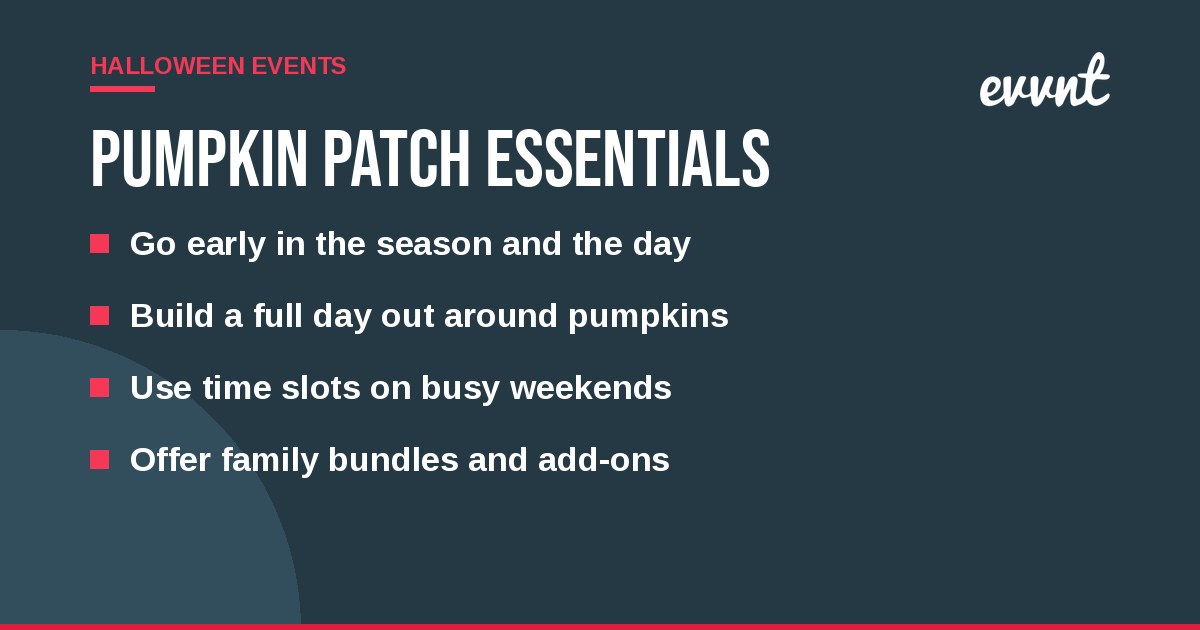
Image: Evvnt
Running a pumpkin patch: a guide for farms and organizers
A successful pumpkin patch is part agriculture and part event management. The growing happens months earlier; the event side needs just as much planning.
Decide on your model
Will you charge admission, sell pumpkins by size or weight, or both? Free entry can attract more visitors, while a ticketed model gives you predictable revenue and makes it easier to control crowd sizes. Many patches use a hybrid: free weekday entry and ticketed weekends with activities included.
Build an experience around the pumpkins
Families will often travel further and stay longer for a full day out. Consider what you can add with the space and staff you have: a hayride loop, a kids' maze, a photo area, a food stand, live music on weekends. Each addition is another reason to visit and another thing to promote.
Plan for parking and flow
On a sunny Saturday in October, parking and entry can become your biggest headache. Mark parking clearly, have staff or volunteers directing cars, and create a simple entry flow where guests can show tickets quickly. Timed entry on peak days can smooth out arrivals.
Cover the basics
Check with your local authorities about any permits needed for public events, food sales and temporary structures. Make sure your insurance covers visitors and activities such as hayrides. Provide restrooms, handwashing stations, shade and seating, and clearly signposted first aid.
Ticketing tips for pumpkin patches
- Sell by date and time slot on busy weekends to control capacity.
- Create family bundles so a group of four can buy in one click.
- Offer add-ons such as a hayride, a pumpkin to take home or a carving kit.
- Use weekday pricing to encourage visits on quieter days.
- Include school and group bookings as a separate ticket type for field trips.
Evvnt makes it simple to create tickets for your pumpkin patch, from timed entry to family bundles.
Getting the word out
Families start planning fall outings early, often in September. Make sure your patch is easy to find wherever people look for local things to do:
- Post your opening date, hours and what is included as soon as they are confirmed.
- Share photos as the pumpkins ripen. They build anticipation and look great on social media.
- Highlight what makes your patch special: a giant pumpkin display, a sunflower field, a new maze.
- Update your listings with weather closures or sell-outs so visitors are not disappointed.
With Evvnt, you can submit your pumpkin patch once and have it promoted across 40+ event sites, so families searching for fall activities find you. You can see how Halloween and fall events are showcased on our Halloween events page.
Final word
Pumpkin patches remain a classic for a reason: they are simple, seasonal and fun for every age. For visitors, a little planning means a better day out. For farms and organizers, a clear ticketing setup and steady promotion can turn a field of pumpkins into one of the busiest destinations of the fall.