Long before Halloween became a night of costumes and candy, the end of October was a time to celebrate the harvest. That spirit lives on in fall and harvest festivals: seasonal gatherings full of local food, crafts, live music, games and family activities. They welcome every age and every scare level, and they are some of the most community-minded events on the autumn calendar.
Here is a guide to enjoying fall festivals as an attendee, and to planning, ticketing and promoting one as an event creator.
A season with deep roots
Harvest celebrations are among the oldest festivals in many cultures, marking the end of the growing season and the gathering of crops before winter. Halloween itself is widely associated with Samhain, the ancient Celtic festival that marked the end of the harvest and the beginning of the darker half of the year. Modern fall festivals carry forward that idea of gathering, sharing food and celebrating the season together.
What to expect at a fall or harvest festival
No two fall festivals are exactly alike, but most offer a mix of:
- Food and drink: seasonal favorites like cider, pies, roasted corn, chili and local produce.
- Crafts and makers' markets with local artisans selling handmade goods.
- Live music on a main stage or in smaller corners of the festival.
- Family activities such as pumpkin painting, face painting, hayrides, inflatables and games.
- Contests including pie baking, chili cook-offs, giant pumpkin weigh-ins and costume parades.
- Farm and garden displays celebrating local agriculture.
Festivals may be hosted by towns, farms, schools, churches, breweries, wineries, nonprofits or business districts. Some are free to enter; others charge admission or sell activity wristbands.
Tips for attendees
Check the schedule
Many festivals publish a schedule of music, contests and activities. Plan around the parts you most want to see, such as a band you love or the pie contest judging.
Bring cash and a bag
While many vendors accept cards, some smaller stalls may not. A tote bag is handy for crafts and produce.
Arrive early or late
Midday is usually busiest. Arrive at opening for shorter lines and the best selection at markets, or come later in the afternoon for a more relaxed atmosphere and evening music.
Dress for the day
Fall weather can change quickly. Layers, comfortable shoes and a plan for rain will keep the day fun.
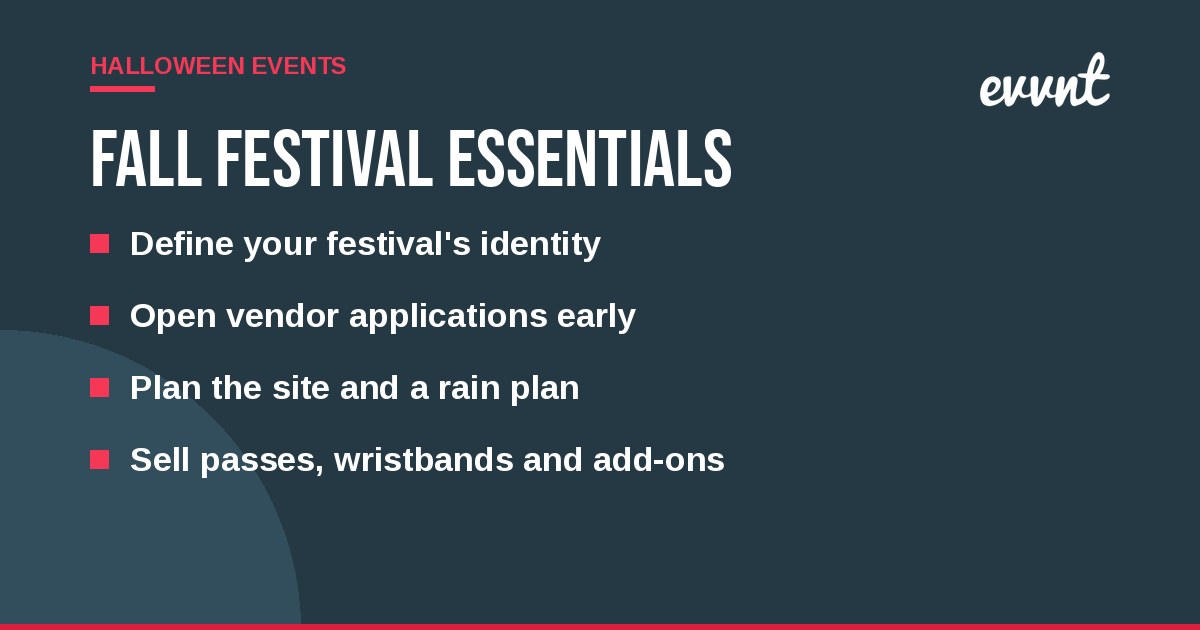
Image: Evvnt
Planning a fall festival: a guide for event creators
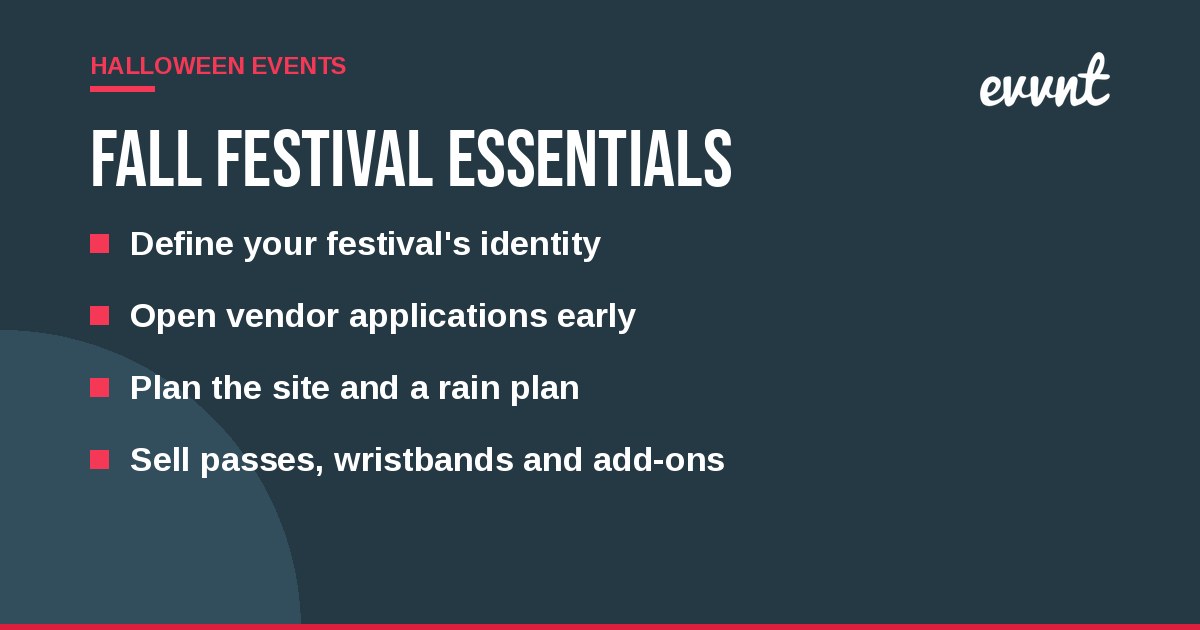
Define your festival's identity
What makes your festival unique? A focus on local farms, a particular food, a music lineup, a family-first atmosphere or a creative theme? A clear identity helps you choose vendors, entertainment and activities, and makes your festival easier to promote.
Build your vendor lineup
Open vendor applications early in the summer. Create a simple application with fees, booth sizes, power availability and rules. A good mix of food, crafts and local businesses keeps the festival interesting. Check your local requirements for food vendors and temporary food permits.
Program the day
Schedule entertainment and activities so there is always something happening. Spread major moments, such as contest results, headline acts and parades, across the day so crowds do not all peak at once.
Plan the site
Map out vendor booths, stages, food areas, seating, restrooms, first aid, accessible routes and entrances. Think about parking or shuttle options for larger festivals. Plan for waste and recycling, which can be one of the biggest behind-the-scenes jobs at a food-heavy festival.
Recruit volunteers
Many fall festivals rely on volunteers for setup, information booths, activities and cleanup. Recruit early, give clear roles and say thank you. Many volunteers come back year after year.
Prepare for weather
Have a rain plan: tents, an indoor backup, or a clear policy on postponement. Communicate it in advance to vendors and attendees.
Ticketing a fall festival
Even if entry is free, ticketing tools can help you manage and grow your festival:
- General admission tickets, with discounted advance pricing.
- Family packs for two adults and two or more kids.
- Activity wristbands covering hayrides, inflatables and games.
- Tasting tickets for food, cider or wine and beer sampling, with age verification where alcohol is involved.
- VIP experiences such as reserved seating near the stage or a hospitality area.
- Free registration to estimate attendance if your festival has no entry fee.
Evvnt lets you sell tickets for your fall festival, from general admission to add-ons, all in one place.
Promoting your festival
Fall weekends book up quickly, so announce your date early, ideally months ahead for larger festivals. Then build momentum:
- Announce vendors, bands and activities in waves to give people new reasons to pay attention.
- Share photos and video from past years.
- Ask vendors and performers to share the event with their followers.
- Highlight family-friendly and free elements. They broaden your audience.
- Post a final countdown with the schedule, parking information and weather updates.
Evvnt can promote your festival across 40+ event sites, so people planning their fall weekends can find you wherever they search. Explore more seasonal event ideas on our Halloween events page.
Festival planning checklist
- Date, site and rain plan confirmed
- Vendor applications open, with permits checked
- Stage schedule and activities programmed
- Site map with restrooms, first aid and accessible routes
- Volunteers recruited and briefed
- Tickets, wristbands or free registration live
Final word
Fall and harvest festivals are a celebration of community: local food, local makers, local music and neighbors coming together. For attendees, they are an easy, joyful way to welcome the season. For event creators, they are a chance to build a tradition that grows year after year with thoughtful planning, flexible ticketing and steady promotion.